Tree Removal Nottingham: Tree Felling Done Safely and Cleanly
- NPTC-certified for aerial tree work, chainsaw operation, and rigging and controlled dismantling
- £5,000,000 public liability insurance
- Founder George hands-on from the first call through to the final site check
A tree that's dead, dangerously leaning, storm-damaged or simply too big for where it's growing needs to come down safely, not hacked apart from a ladder with a bow saw. We fell trees in one piece where there's open space to drop them, or take them down section by section, roped and lowered under control, wherever buildings, fences, power lines or a neighbour's garden are close by.
Most removals are wrapped up in a single visit, from the initial assessment through to felling, cutting up the timber and a full site clean-up, with stump grinding available from the same crew if you want the job finished completely. If a tree needs urgent attention after a storm, our emergency tree service covers that separately.
How We Take a Tree Down, From Assessment to Clean-Up
- Free assessment -- We look at the tree's size, species, condition and surroundings, nearby structures, power lines, how much room there is to work with, and give you a written quote before anything starts.
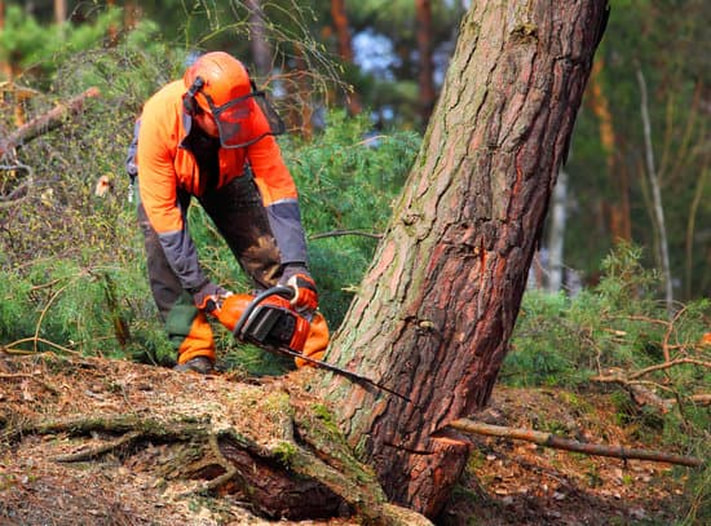
- Deciding how it comes down -- Where there's open space, the tree is felled in one piece: a rope is set, a notch cut into the base, then a back cut directs the fall exactly where it's meant to go. Where space is tight, it's taken down section by section instead, roped and lowered under control from the top down.
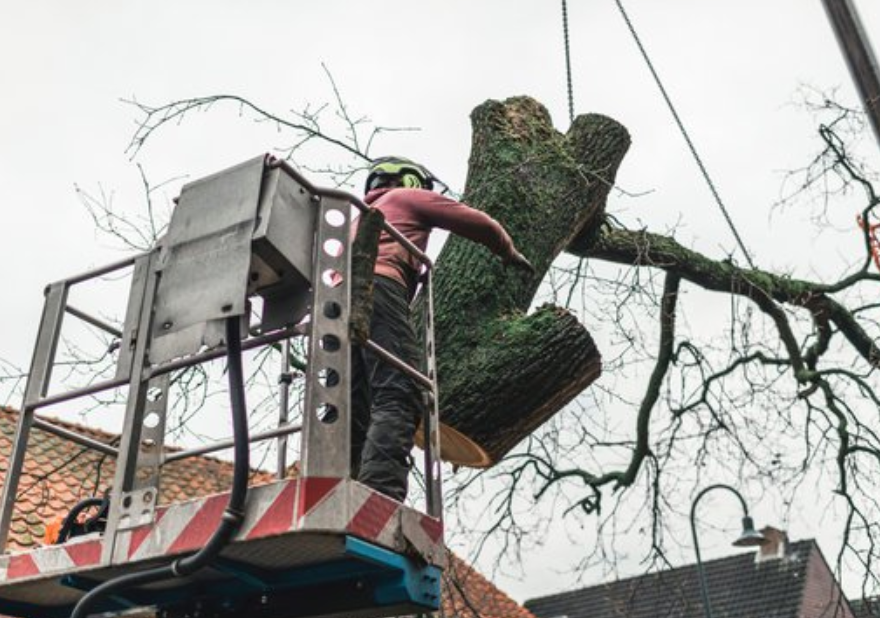
- Cutting and rigging -- For a sectional dismantle, our climber sets up rigging at a centre point, then cuts and lowers branches and trunk sections to the ground crew piece by piece rather than letting anything drop free.
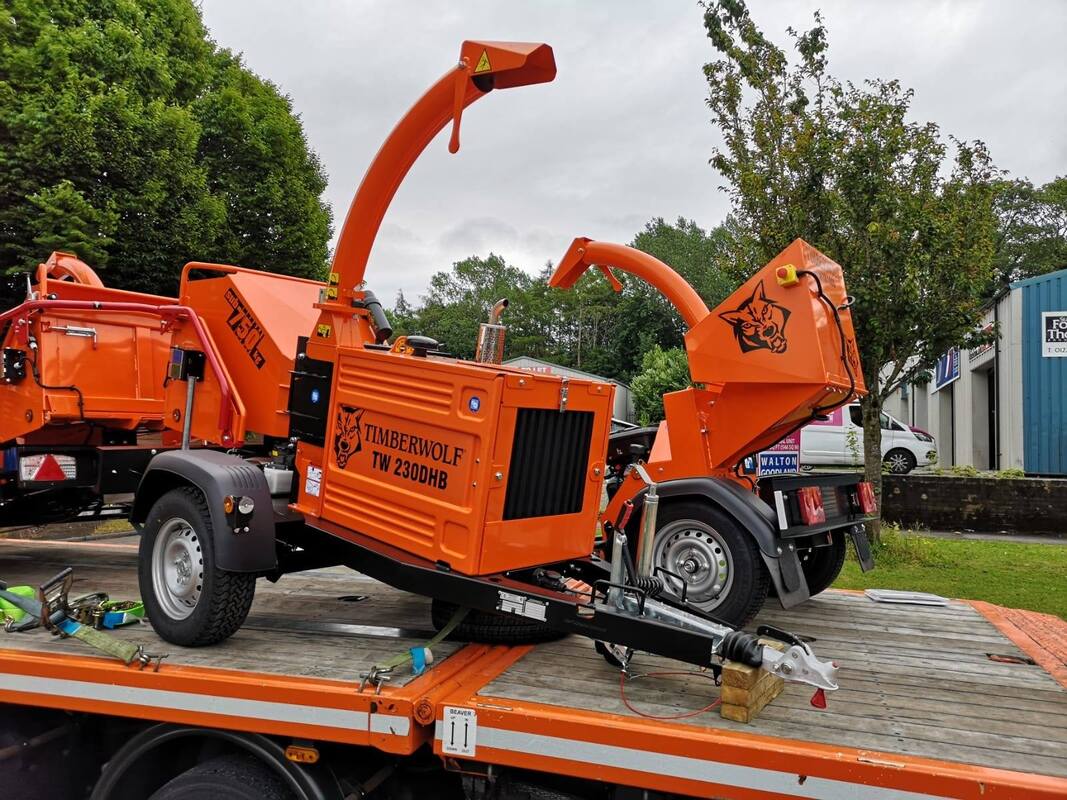
- Processing the timber -- Once the tree is on the ground, it's cut up on site. Usable timber goes on for milling, and smaller branches go through the chipper for mulch rather than to landfill.
- Clean-up -- All branches, leaves and debris are cleared before the crew leaves, so the site is left tidy rather than just felled and abandoned.
- Stump grinding, if you want it -- The same crew can grind the stump down below ground level in the same visit, see our stump grinding and removal page for how that side of the job works.
What's Covered in a Tree Removal Job (and What Costs Extra)
- Felling a tree in one piece where there's room to drop it safely, or sectional dismantling branch by branch and section by section where buildings, power lines, fences or the road are close by
- Cutting up the trunk and branches once the tree is down, with usable timber sent on for milling and smaller branches run through a chipper for mulch rather than sent to landfill
- Full site clean-up and removal of all branches, leaves and debris before the crew leaves your property
- Removal of dead, dying, storm-damaged or diseased trees, including trees that have already lost a limb or are leaning after wind or lightning damage
- 24-hour emergency response for storm-damaged or fallen trees, including making a hazardous tree safe and clearing blocked access
- A free on-site assessment and written quote before any work starts, for both residential and commercial properties
Not Included / Costed Separately
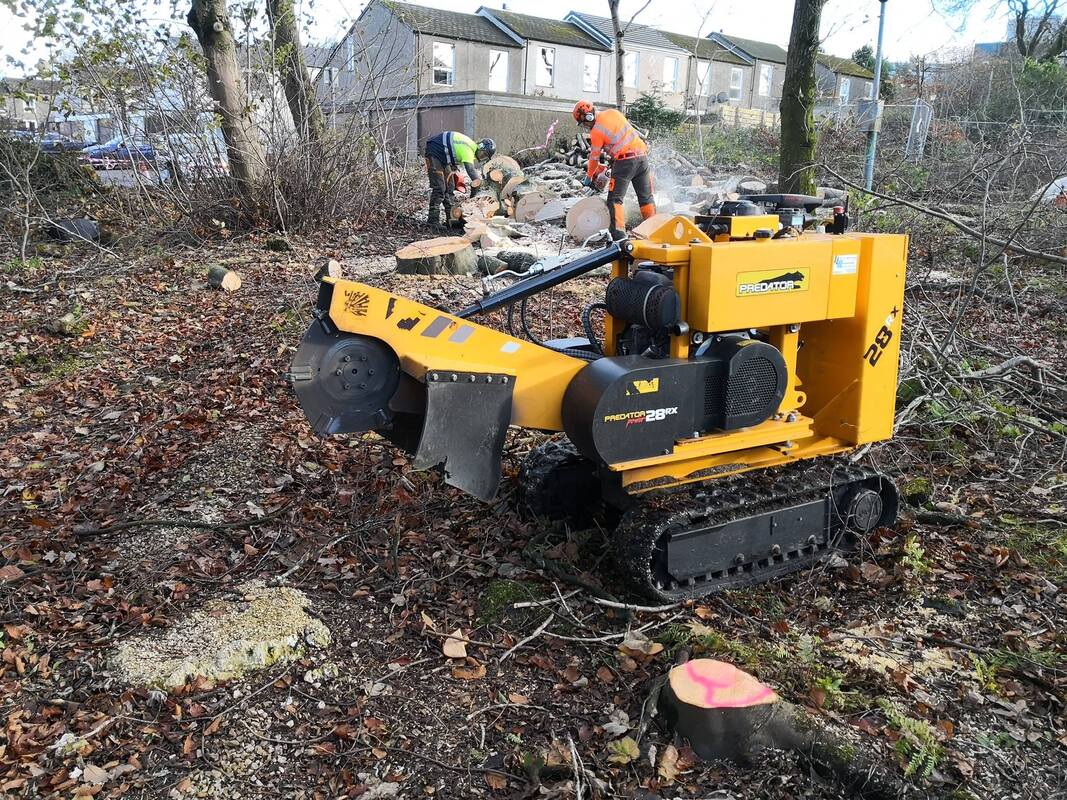
- Stump grinding is quoted and charged separately from the felling itself — typically an extra £300 to £500 depending on the stump's size — though it's carried out by the same crew rather than handed to a subcontractor, so it can usually be done in the same visit if you want it finished there and then
- Crane hire or specialist rigging for very large, tall or hard-to-reach trees, which pushes the price up from the standard £1,000-plus bracket for larger and more difficult removals
- Any tree covered by a Tree Preservation Order or standing in a conservation area needs written council consent before work can start — this isn't something we can arrange on your behalf, though we'll flag it during the assessment if we spot it
How We Compare on the Part That Usually Gets Subcontracted
| What matters on the day | Stump Grinding and Stump Removal Services | Typical subcontracted tree surgeon |
|---|---|---|
| Stump removal after felling | Same crew grinds the stump — no second company, no second visit | Often subcontracted out, meaning a separate booking and a separate invoice |
| Certification on the tools that matter | NPTC-certified for aerial tree work, chainsaw operation, and rigging and controlled dismantling | Certification levels vary and aren't always published |
| Public liability cover | £5,000,000 | Often lower, or not stated on the website |
| Who's actually on site | Founder George is involved from the first phone call through to the final site check | Owner may never visit; job run entirely by employed crews |
Certified for the Part of a Removal That Actually Goes Wrong
Felling a garden tree with open space to drop it into is one kind of job. Taking one down over a conservatory roof, between two fences, or a few metres from next door's kitchen window is a different one — the tree has to come down in sections, roped and lowered under control rather than dropped in one piece, and that's where things go wrong if whoever is running the saw hasn't trained specifically for it. Our climbers hold NPTC certification in aerial tree work, chainsaw operation, and rigging and controlled dismantling, which covers exactly that situation: bringing a tree down piece by piece with control over where each section lands, not gambling on a clean fell because the space is tight. The business also carries £5,000,000 public liability insurance, which matters more on a removal than on most other tree jobs, simply because of how much sits within falling distance of a mature trunk — sheds, cars, greenhouses, a neighbour's fence. Founder George still visits jobs himself rather than pricing a removal from a photo; on anything with a tight drop zone, seeing the site in person is often what separates a straightforward job from one that needs a different approach altogether. In his words: "I love talking trees and stump removals. We built this business on trust and personal service. No matter the size of the job—whether it's pruning a small garden fruit tree, helping a property factor maintain an entire housing estate, or clearing a commercial site of thirty mature oaks—we bring the same level of care, respect, and energy to your property."
Areas We Cover Around Long Eaton and Nottingham
We're based in Long Eaton, on the Nottinghamshire/Derbyshire border, and most removal jobs are within a short drive of there — Long Eaton itself, plus Sandiacre, Breaston and Draycott on the Derbyshire side, and Beeston, Chilwell, Stapleford, Toton, Attenborough, West Bridgford, Wilford, Ruddington and Clifton across into Nottinghamshire. That county line matters more than people expect when it comes to permissions: Long Eaton falls under Erewash Borough Council, Beeston and Stapleford answer to Broxtowe, West Bridgford and Ruddington to Rushcliffe, and anywhere closer to the city centre to Nottingham City Council — four separate planning departments, each running its own Tree Preservation Order and conservation-area process, so a tree needing written consent on one street might not need it two roads over under a different authority. We check which council a property falls under as part of the assessment rather than assuming it matches the last job we did nearby. Ground conditions shift across the area too: low-lying stretches near the river — Attenborough, Trent Lock, and the parts of Long Eaton and Beeston closest to the Trent — sit on damp, heavy clay from the floodplain, which tends to produce shallower, wider root plates on large trees and leaves them more prone to leaning after storms; it's also soft going underfoot, so stump grinders sometimes need boards laid down first to avoid rutting a lawn or driveway. Higher ground further from the river, up around Mapperley and the sandstone ridge the city itself is built on, gives roots less depth to work with but generally firmer, drier anchoring.
Questions About Tree Removal in Nottingham
Do I need permission before a tree on my property can be removed?
Sometimes. If the tree has a Tree Preservation Order (TPO) on it, or it stands inside a conservation area, you'll need written consent from the local council before any cutting starts — removing it without that consent can lead to a fine. Most trees in an ordinary garden won't have a TPO, but older or more prominent trees sometimes do, and it isn't always obvious just by looking at it. We'll flag anything that looks like it might be protected during the assessment, though checking with your council is ultimately down to you as the tree's owner.
Is stump grinding included when you take a tree down, or is it a separate job?
It's priced separately from the felling itself, usually adding £300 to £500 depending on the stump's size and how accessible it is. It's a separate line on the quote rather than a separate booking with another company — our own crew grinds the stump, so it can usually be done in the same visit as the felling if you want it finished there and then. See our stump grinding and removal page for more on how that side of the job works.
How fast can you get to a storm-damaged or dangerous tree?
Emergency call-outs are available around the clock, and a leaning tree, a hanging limb, or anything blocking a driveway or road is treated as a priority job rather than slotted in behind routine work. What we do first depends on the risk — sometimes that's making the tree safe first (removing the hazardous limb, roping off the area), with the full removal following once it's no longer an immediate danger. If a tree looks unstable after a storm, it's worth calling straight away rather than waiting to see if it settles.
What qualifications and insurance does your crew actually have?
Anyone working at height or running a chainsaw on your property holds NPTC certification for aerial tree work, chainsaw operation, and rigging and controlled dismantling — the standard trade qualifications for climbing, cutting, and safely lowering sections of a tree near buildings or other obstacles. The business also carries £5,000,000 public liability insurance, which covers your property if something goes wrong during the work. Founder George is involved on every job, from the first call through to a final check once the crew has left.
Get Your Free, No-Obligation Quote
Tell us a bit about the job and we'll come back to you with honest advice and a free quote — usually within 24 hours.
- NPTC-certified for aerial tree work, chainsaw operation, and rigging and controlled dismantling
- £5,000,000 public liability insurance
- Founder George hands-on from the first call through to the final site check