
Stump Grinding Nottingham: Tree Stump Removal Done Properly
- £5,000,000 public liability cover on every job
- In-house team from felling to grinding - no subcontracted stump crews
- Founder George involved from the first call to the final site check
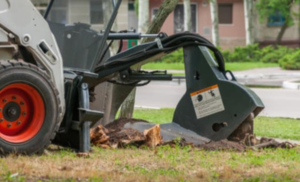
A tree stump sitting in the lawn does more than spoil the view. It catches ride-on mower blades, hides under the grass as a trip hazard for kids and grandparents, and stops you using that patch of garden for anything else until it's gone. Grinding it out is usually the most straightforward fix: a machine grinds the wood down below soil level so the area can be turfed, planted or paved over, rather than digging out a root ball by hand or waiting years for a stump to rot on its own.
Grinding isn't the only route - some situations call for a slower chemical approach instead, which is covered on the eco stump treatment page if that fits your stump better. Most jobs, though, are ground out in a single visit, whether it's one stump left after a storm-damaged tree came down in a Wollaton garden or a run of stumps cleared from a commercial site after a felling contract.
What's Covered in a Grinding Visit, and What Isn't
- Grinding the stump and visible root flare to roughly 25-30cm below soil level, or deeper on request if you're planning to plant or lay a driveway over the spot
- A CAT scan of the ground before grinding starts, to check for buried gas, water or electrical services near the stump
- Moving garden furniture, planters and other obstacles out of the way before work starts, and putting them back afterwards
- Backfilling the hole with the grindings mixed with soil, levelled off ready for turf or planting
- Spreading leftover grindings on garden borders as mulch if you want them, or loading them out and removing them from site if you don't
- Grinding multiple stumps in a single visit where a property has more than one to clear
- A written estimate before work starts, setting out the job and the price
- Working around fences, drain covers, manholes and other fixed features flagged at the quote stage, so nothing gets caught by the grinder on the day
Not Included / Costed Separately
- Roots that run out beyond the grinding radius - these aren't dug out or chased through the lawn, they're left to break down naturally underground
- Full root ball extraction (digging the whole root system out) - a different job to grinding, and one that does far more damage to the surrounding lawn or paving
- Turfing, reseeding or planting after the hole is backfilled, unless you arrange it as part of the job
- Utility company diversions - if the CAT scan finds a service too close to work around safely, that gets flagged and referred rather than worked around on the day
- Stump removal from inside buildings or under existing structures such as extensions or garages
- Skip hire or tip fees for large volumes of grindings, if you want a big pile taken off-site rather than left as mulch
- Repairing fencing, paving or structures that were already damaged or unstable before we arrived - only work carried out as part of the grinding itself is covered
Locating the Stump, Scanning for Services, Agreeing the Backfill
- Call and describe the stump -- Tell us the rough diameter, whether it's a single stump or several, how long it's been in the ground, and what's around it - fence, patio, drain covers. That's usually enough for a ballpark figure over the phone.
- Site visit and firm quote -- For anything beyond a small, easy-access stump, someone comes out to look at root spread, ground slope and how close the machine can get, then gives you a fixed price rather than an estimate that might change on the day.
- CAT scan and prep -- Before the grinder starts, the ground around the stump gets scanned for buried cables and pipes, and anything nearby that could be damaged by flying chippings - pots, low fencing, garden ornaments - gets moved clear.
- Grinding -- The stump and root flare are ground down to around 25-30cm below the surface, deeper if you're planning to build over it, working outward until the visible wood is gone.
- Backfill and tidy -- The hole gets filled with the grindings and soil and levelled off. Anything moved earlier goes back where it was, and the grindings are either spread on your borders or cleared off site, whichever you'd rather.
- Walk the site together -- Before anyone leaves, you get to check the job over. George or the crew lead will point out anything worth knowing, like how long to leave the backfill settle before turfing over it.
Stump Grinding Prices: Diameter, Access and Depth
Across the Midlands, stump grinding tends to run from about £60 to £200 per stump, and nationally the typical range sits between £60 and £300. Roughly speaking, a small stump under about 25cm diameter lands nearer £75-£150, a medium stump £150-£300, and a large or multi-stemmed stump can go to £300-£600 or more, since grinding a root flare that wide takes real machine time. Diameter is the biggest factor, but access matters almost as much - a stump you can drive a grinder straight up to costs less to deal with than one tucked behind a fence, down a side passage, or on a steep slope where the machine has to be walked in rather than driven. Grinding several stumps on the same visit usually works out cheaper per stump than booking them separately, since the machine's already on site and set up, so flag every stump on the property when you first call rather than booking them one at a time. None of this replaces an actual quote - the only way to give you an accurate figure is to see the stump, or at minimum a couple of clear photos with something in shot for scale, so a site visit or photo assessment is the next step for anything beyond a rough ballpark.
DIY Grinder Hire, a Subcontracted Crew, or Us
| Hiring a grinder yourself | Tree surgeon who subcontracts the stump | In-house stump grinding | |
|---|---|---|---|
| Underground service check | Down to you to arrange | Depends on who they bring in | CAT scan carried out before grinding starts |
| Public liability cover | Usually none unless you buy it separately | Varies by subcontractor | £5,000,000 cover on every job |
| Who's actually on site | You, on a machine you've likely never used | A second company you've not spoken to | The same team from quote to sign-off |
| Grindings and waste | Yours to clear and dispose of | Depends on the subcontractor's own terms | Left as mulch or cleared - your choice |
| Follow-on tree work | A separate job and a separate booking | Handed back to the original tree surgeon | Same team can price pruning or felling if it's needed |
The Stump Job That Started the Business
What separates a competent grinding job from a genuinely careful one usually comes down to calls made before the grinder ever touches wood. How closely a CAT scan reading needs to be checked against the quote-stage plan before starting, rather than after a chip's already flying, is one - a gas or water service sitting closer to the root flare than expected on the day changes the whole approach, and that's a judgement about whether to work round it, grind shallower on that side, or stop and refer it on, not something a fixed procedure covers on its own. Backfill is another: whether the grindings go straight back into the hole as fill, get mixed with topsoil ready for turfing, or come off site altogether depends on what the customer's actually planning for that patch of garden afterwards, and that only comes out by asking rather than assuming everyone wants the same finish.
Grinding is also where this business started, before pruning or felling were ever offered - George built the early reputation on finishing what a tree job leaves behind, clearing and grinding the root out once the trunk was already down, and the reputation for tree work itself grew out of that rather than the other way round. Tree Services, Forestry Services and Property Maintenance for Factors & Landlords all followed afterwards, built on top of a company that already knew stumps and root systems in detail.
None of the calls above get handed off site to someone reading a description over the phone. George is on the job from the first call describing the stump through to standing over the backfilled hole confirming it's level, and where the grinder operator needs to judge how close is too close to a wall, a drain or a root running under someone else's fence, that's backed by NPTC certification in aerial tree work, chainsaw operation, and rigging and controlled dismantling - training built for exactly the kind of on-the-spot judgement a stump this close to a structure needs, not paperwork kept for a different part of the business. Cover matters here too - £5,000,000 in public liability insurance applies whether the crew is grinding a stump or felling the tree that produced it, not one job weighted over the other.
Long Eaton, Nottingham and the Ground Around Them
The business is based in Long Eaton, and Nottingham makes up the bulk of the stump grinding work - gardens, driveways and commercial sites across the city and out into West Bridgford, Wollaton, Arnold, Carlton, Mapperley and Woodthorpe. The Park Estate's mature gardens and Victorian-era terraces mean older, larger stumps are common there, and grinding close to a period property's foundations is something we're careful with rather than something we rush. Wollaton's proximity to Wollaton Park brings a fair few storm-damaged or diseased stumps from established garden trees rather than small ornamental ones. Out toward Ravenshead and Southwell, gardens and plots tend to be larger and more rural, so stumps are often bigger and further from the road, which is where access and machine-walking distance start to affect the price more than diameter does. Beeston, Bramcote, Attenborough, Edwalton, Gamston, Ruddington and Bingham are all regular runs too - Attenborough in particular sits close enough to the nature reserve that we're mindful of wet, low-lying ground affecting when heavy plant can get on site safely. Jobs further out in Hucknall, Derby and Mansfield get covered from the same base without an extra call-out being tacked on.
Answers to the Questions We Get Asked Most
How much does it cost to have a tree stump ground out in Nottingham?
Most single stumps come in somewhere between £75 and £300, with small stumps at the lower end and large or multi-stemmed ones pushing past £300. Across the Midlands, day-to-day pricing tends to sit closer to £60-£200 per stump. Diameter is the main driver, but access, how many stumps you want doing, and whether the ground slopes or is hemmed in by fencing and paving all move the number. A proper figure needs eyes on the stump, or clear photos with something for scale, rather than a number over the phone.
How deep below the surface does stump grinding actually go?
Standard depth is around 25-30cm, roughly 10-12 inches, below the surrounding soil level, which is enough for turf, planting, or general garden use afterwards. If you're planning to lay a driveway, patio, or building foundation over the spot, say so before the job starts, since that needs grinding deeper and the root flare cleared wider than a normal garden reinstatement.
Can grass or a new tree be planted straight over a ground stump?
Grass, yes, once the backfill has settled and been topped up if it dips - freshly ground wood and soil compacts a bit over the following weeks. A new tree in exactly the same spot is trickier: the ground grindings break down and can rob nitrogen from a young tree's roots as they rot, so it's worth planting a foot or so to the side, or waiting a season, rather than going straight back into the same hole.
How long does stump grinding take for an average garden tree?
A single stump of ordinary size is usually done within an hour or two once the grinder's set up on site, including backfilling. Bigger stumps, several stumps on the same visit, or awkward access that means walking the machine round the back of a house all add time. Build in a bit of slack either side of a scheduled visit rather than planning the whole day around an exact finish time.
Will stump grinding damage my lawn, patio or driveway?
The grinder itself is tracked and reasonably wide, so getting it to the stump can leave temporary marks on soft lawn, which usually recover within a few weeks. Boards go down to protect paving and grass on the route in wherever it's needed. Vibration from grinding is fairly localised to the stump itself and isn't something that's caused problems with nearby structures on the jobs we've done, including older properties on the more Victorian streets around The Park Estate, but if a stump sits right up against a wall or a boundary you're concerned about, mention it at the quote stage so it gets factored into how the job's approached.
What happens to all the wood chippings after grinding - are they removed or left?
Either, whichever suits you. A lot of customers keep the grindings and spread them on garden borders, where they break down into a decent mulch over a year or two. If you'd rather not have a pile of chippings sitting around, we load them out and take them away as part of the job - just say which you'd prefer before work starts.
Is stump grinding safe for stumps near underground pipes or cables?
The ground around the stump gets scanned with a CAT detector before grinding starts, specifically to pick up buried gas, water and electrical services nearby. If something's found close enough to be a genuine risk, that gets flagged before the machine goes anywhere near it, rather than discovered mid-job. It's a standard step on every visit, not something that only happens if you ask for it.
Will grinding a stump close to a shared boundary wall in Nottingham need my neighbour's permission?
If the stump sits on your side of the boundary, you don't need permission to have it ground out. Where it gets more sensible to mention it to them is if roots have spread under the wall or fence into their garden, or if the grinder genuinely needs to work from their side to reach it safely - grinding does throw chippings and makes a fair bit of noise while it's running, so a quick heads-up avoids an awkward conversation over the fence afterwards, even though there's no formal requirement to ask.
Could an old, rotten stump have anything living in it that needs thinking about before it's ground out?
Decaying stumps that have been in the ground a long time can host insect larvae, including stag beetles, which favour rotting wood and buried root systems, though stag beetles are more strongly associated with southern England than Nottinghamshire, so it's not something that comes up often here. If a stump looks old and heavily rotted with visible larval holes or galleries in the wood, it's worth a quick look before grinding rather than assuming it's empty, and there are cases where leaving a section of root or deadwood in place is the better call ecologically rather than grinding every trace of it out.
Get Your Free, No-Obligation Quote
Tell us a bit about the job and we'll come back to you with honest advice and a free quote — usually within 24 hours.
- £5,000,000 public liability cover on every job
- In-house team from felling to grinding - no subcontracted stump crews
- Founder George involved from the first call to the final site check
Or call 0115-647-2443
Get My Free Quote
Every Season the Stump Sits, Grinding Gets Harder
A stump left in the ground doesn't stay the same size or price forever - roots keep spreading, the wood gets harder to grind as it seasons, and what's a straightforward job now can turn into a bigger one in a year or two. Ring us with the rough size and where it is, and we'll talk through whether it's a quick phone quote or worth a site visit first.
Stump Grinding and Stump Removal Services
Call 0115-647-2443